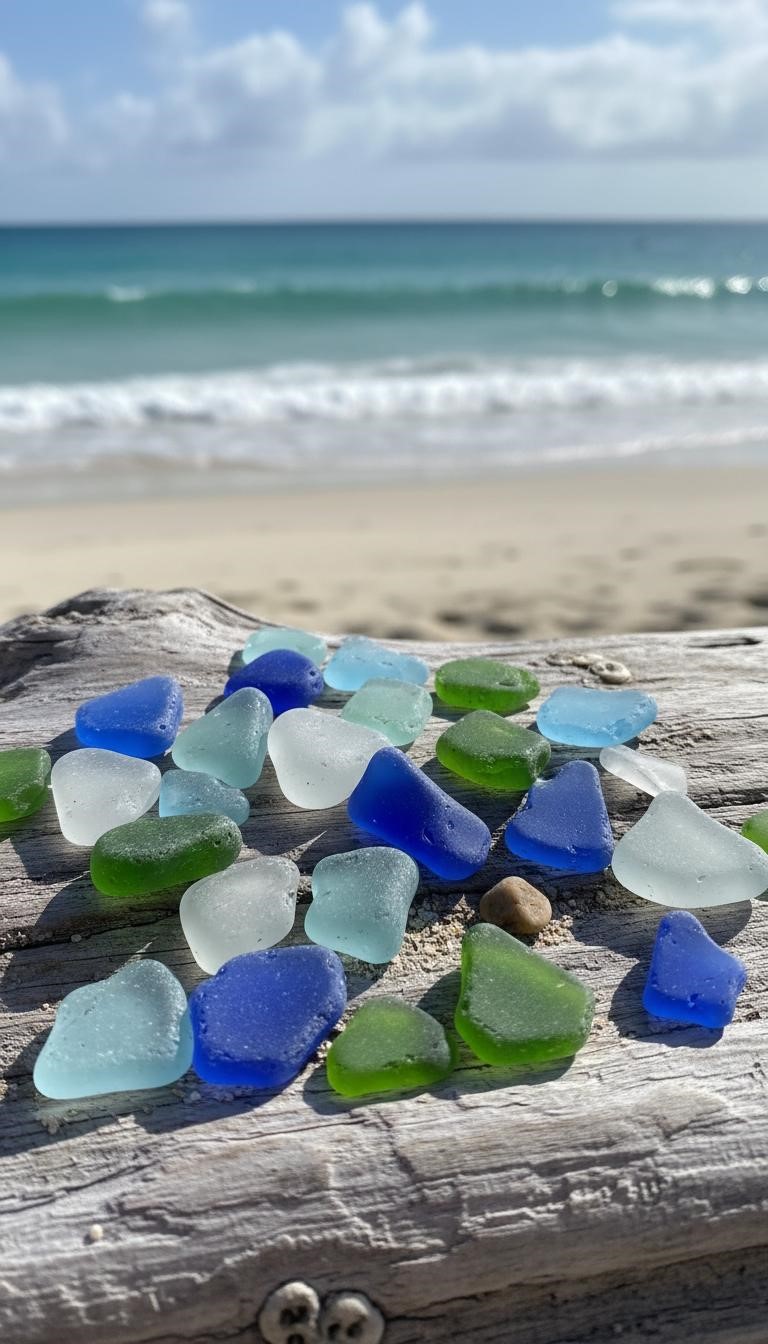
Along certain shorelines after a storm, patient walkers find something extraordinary scattered among the sand and shells. These frosted, jewel-toned fragments—smooth as satin and glowing with muted color—are sea glass, the ocean’s way of turning discarded trash into treasure. The phenomenon begins when bottles, windows, or decorative objects find their way into the sea, where waves, sand, and salt water begin a transformation that cannot be rushed.
The predecessor to modern sea glass was simply broken glass—bottles tossed overboard, windows shattered by storms, pottery discarded on shores. Once submerged, the real work begins. Ocean waves tumble shards against sand and rock, physically grinding away sharp edges. Salt water chemically etches the surface, creating the signature frosted matte finish that distinguishes genuine sea glass from machine-tumbled imitations. Experts estimate this process takes anywhere from twenty to forty years for basic smoothing, though some pieces may journey for two centuries before washing up as polished gems.
Today’s sea glass landscape reveals a remarkable spectrum of color and rarity. Common finds include frosted white from soda bottles, kelly green from beer and wine containers, and earthy brown from medicine and whiskey bottles. Uncommon shades like pale blue, soft green, and amber appear less frequently. The rare tier includes cobalt blue from early poison bottles, lavender from sun-exposed manganese glass, and teal from ornate window panes. At the extreme end of scarcity sit orange, red, yellow, and turquoise—colors so scarce that finding a single piece can make a collector’s entire season. Red glass often originated from automobile tail lights and ship lanterns, while black “pirate glass” dating to the 1600s hides among dark pebbles, revealing its true olive-green nature only when held to bright light.
Extreme specimens capture global imagination. While no official Guinness record dominates the category, the sea glass community recognizes extraordinary finds: thick, bulbous “bubbles” of white glass weathered for over a century, multi-colored End-of-Day pieces where factory workers dumped leftover molten glass, and perfectly preserved bottle stoppers that survived decades of surf. At the opposite scale, tiny fragments no larger than a grain of rice are treasured by micro-jewelers who set them into delicate rings and pendants.
Sea glass began its ascent as a collectible art form during the late 20th century, when coastal communities started recognizing the beauty of what had previously been considered beach litter. Today the impact is substantial: annual festivals draw thousands of enthusiasts, artisan jewelers craft entire collections around authentic pieces, and online marketplaces connect hunters with buyers worldwide. The North American Sea Glass Association hosts gatherings where experts identify mysterious finds and share stories of particularly rewarding shorelines.
Symbolically, sea glass represents transformation and patience. Sometimes called “mermaid’s tears,” these fragments embody the idea that time and nature can heal what humans break. The journey from sharp, dangerous shard to smooth, touchable gem mirrors broader themes of renewal and redemption. In earlier eras, beachcombers might have pocketed a pretty piece without thought; today, finding a rare color feels like receiving a gift from the tide itself.
What changed most profoundly is perception. Once dismissed as broken bottles and pollution, sea glass has become a legitimate medium for fine jewelry and a benchmark for coastal authenticity. Modern artisans pair it with silver and gold, while decorators fill jars with color-sorted collections as living art. Environmental concerns have also shifted the narrative—as recycling and plastic reduce the amount of glass entering oceans, genuine sea glass becomes scarcer each year, making existing pieces more precious. From ancient scripture’s crystal sea to the frosted fragment in a child’s pocket, glass perfected by water continues proving that beauty often arrives in unexpected forms.