
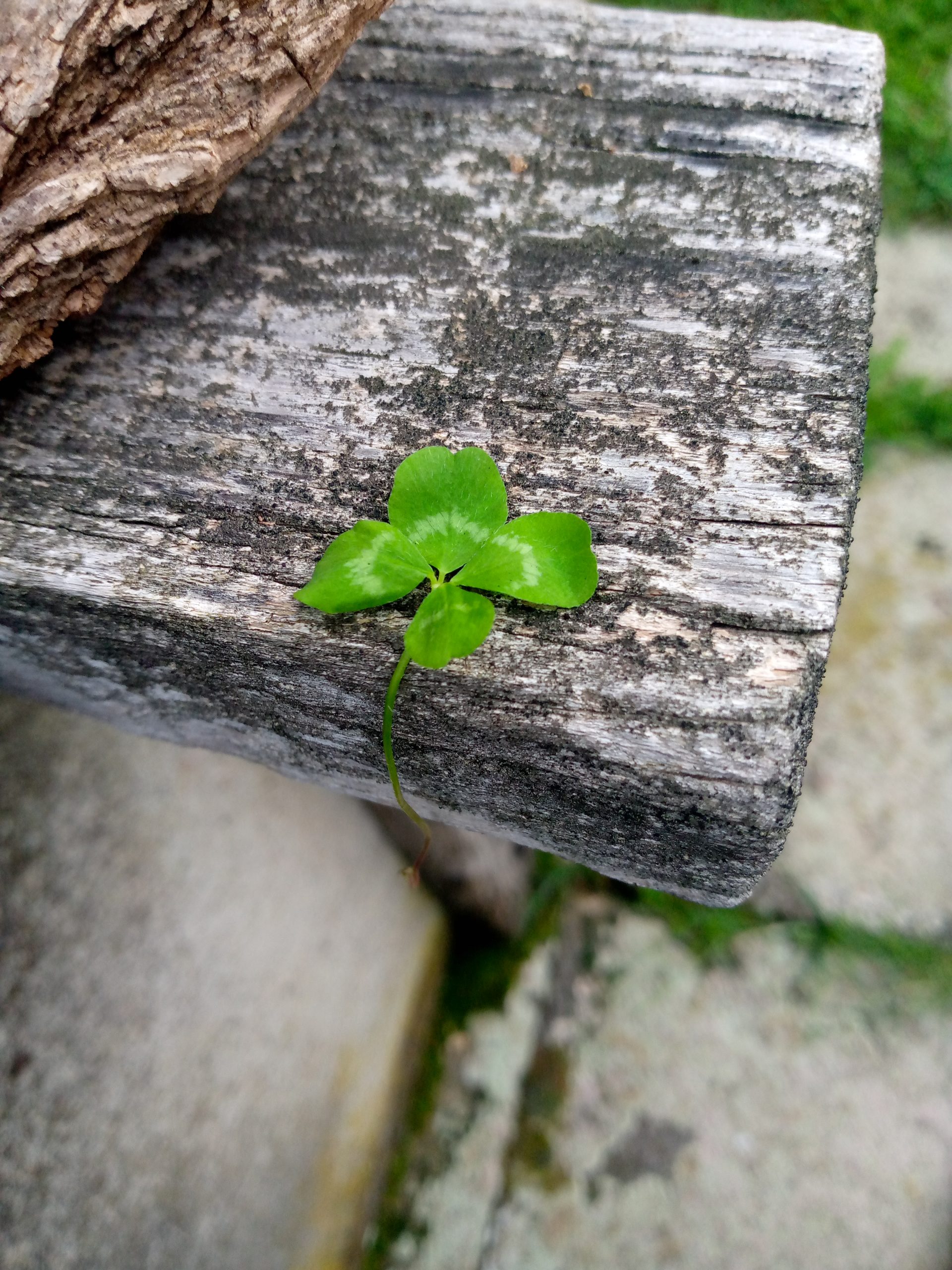
There is a particular kind of joy that belongs to childhood summers—kneeling in a patch of white clover, fingers parting the trifoliate leaves like green curtains, searching for the one that breaks the rule. And when that fourth leaf finally appears, time seems to pause. For a moment, the finder holds something that statistics say should not exist.
The four-leaf clover is, strictly speaking, a botanical rebel. Botanists estimate that only one in every five thousand white clover plants produces the mutation, though certain patches seem blessed with far more, as if the soil itself conspires against the odds. The fourth leaf is not magic; it is a quirk of genetics, sometimes triggered by environment, sometimes by a spontaneous rearrangement of chromosomes. Yet knowing the science does nothing to dim the wonder. If anything, it sharpens it—nature’s lottery, won by simply looking down.
Long before genetics had a name, the Celts understood that four-leaf clovers were different. Druid priests carried them in small pouches, believing the extra leaf granted second sight—the ability to spot evil spirits lurking in the countryside or to see through fairy glamour. In medieval Europe, children pressed them between the pages of prayer books, not merely as tokens of luck, but as small shields against misfortune. The symbolism crystallized over centuries into four pillars: faith, hope, love, and luck. Some traditions swap one virtue for health, or fame, or wealth, but the message remains the same: the rarest things in life carry the fullest meaning.
What few people realize is that the plant producing this lucky charm is quietly heroic in its own right. White clover is a legume, fixing nitrogen into tired soil, creating fertile ground for plants that follow. It feeds bees with nectar-rich blossoms and provides edible flowers that have found their way into salads and teas for generations. Herbal traditions have turned to clover—particularly its red cousin—for supporting respiratory comfort and skin health, though the four-leaf variant itself is prized more for the spirit than the body. Still, brewing a tea from ordinary three-leaf clover blossoms is an old country remedy that survives in rural kitchens, a reminder that this ground-hugging plant offers more than superstition.
Here is something that sounds almost fictional: the current world record for the most leaves on a single clover stem stands at fifty-six. Fifty-six leaves, fanning out like a green peacock’s tail, discovered in Japan. Such extreme mutations make the humble four-leaf clover seem almost common by comparison, yet it is the four-leaf that captured the human imagination. Perhaps because four is a number we can hold in one hand, count on one breath, slip into a wallet and carry across borders.
There is also a lovely old English phrase, “to live in clover,” meaning to live in comfort and abundance. It comes from the observation that cattle grazing in clover fields grow fat and content. The idiom suggests that clover itself is not just luck, but a state of gentle prosperity, available to anyone willing to bend down and look closely enough.
In the end, the four-leaf clover may not change your bank balance or ward off rain. But it does something arguably more valuable: it forces you to slow down, to search, to believe that rarity is real and that you are capable of finding it. That sudden flash of unexpected green against a thousand ordinary leaves is a private victory, a small, wordless promise that if you pay attention, life still hides treasures in the grass.