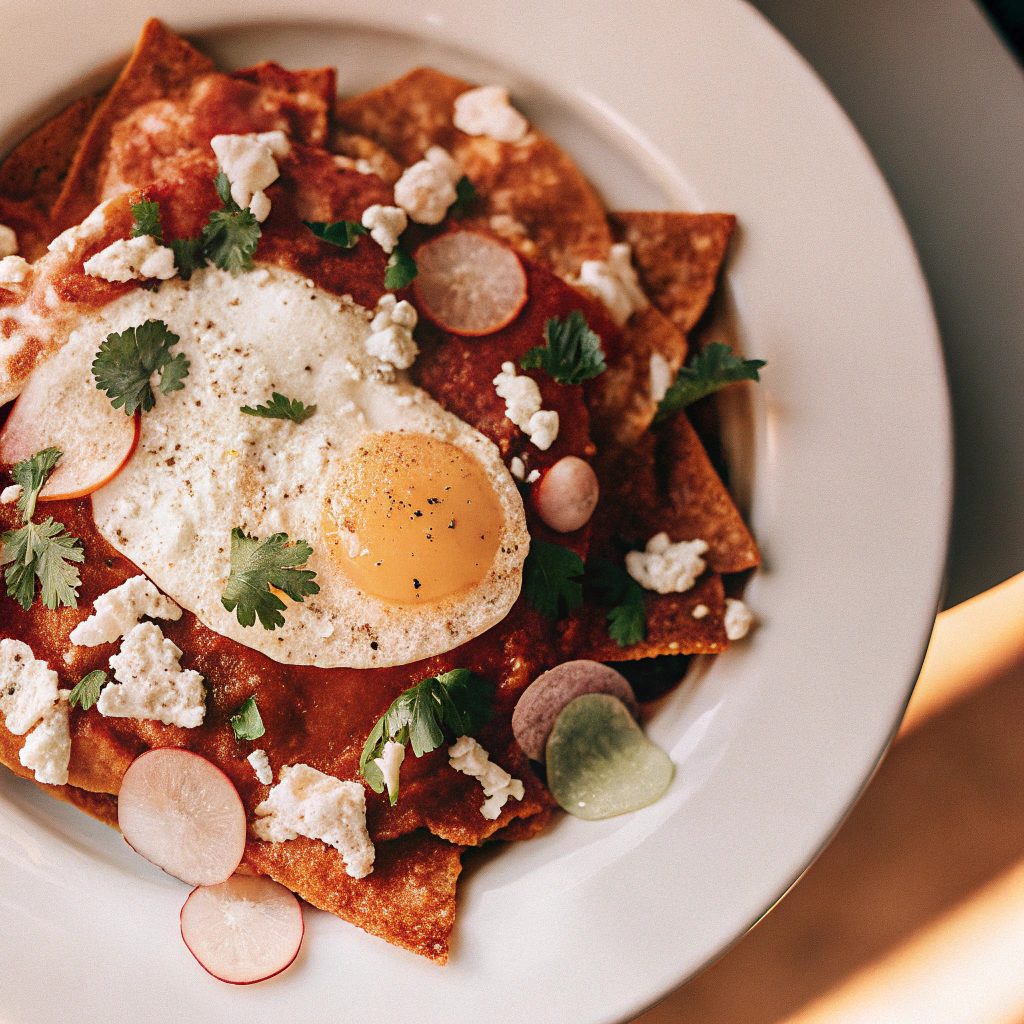
Crispy tortilla chips surrendering to warm salsa, crowned with crumbled cheese and a glistening fried egg — this is the essence of chilaquiles, a dish that has anchored Mexican mornings for centuries. Chilaquiles trace their lineage to the Aztec civilization, where the Nahuatl word chīlāquilitl described “chilied tortillas” or “edible greens with chile water.” The Mexica and Maya peoples already prepared early versions by softening hardened corn tortillas in sauces of chiles and herbs, transforming leftovers into nourishment rather than waste. This practical ingenuity — using stale tortillas as a base rather than discarding them — established the foundational philosophy that still defines authentic chilaquiles today.
When Spanish colonizers arrived in the sixteenth century, they introduced dairy products that would reshape the dish forever. Cheese, cream, and domesticated meats like chicken were incorporated, creating the layered, garnished version recognized across Mexico. By 1821, recipe books from Mexican convents documented the first formal references, though oral tradition suggests the dish circulated in home kitchens long before ink met paper. The first appearance in an English-language cookbook came in 1898, when Encarnación Pinedo featured chilaquiles in The Spanish Cookbook, marking its gradual migration beyond Mexican borders.
Several distinct types define the contemporary landscape. Chilaquiles rojos simmer crispy tortillas in red salsa made from dried chiles like ancho or guajillo, producing a warm, earthy, slightly sweet profile. Chilaquiles verdes use tomatillo-based salsa verde, delivering a brighter, tangier, more herbaceous flavor. Regional variations abound: in Puebla, mole sauce sometimes replaces standard salsa, adding chocolate and spice complexity. Guadalajara-style chilaquiles cook longer until the mixture thickens to a polenta-like consistency, while Mexico City preparations often pour warmed salsa over chips at the last moment to preserve crunch. Modern interpretations have introduced chilaquiles with chipotle adobo, breakfast burrito fillings, and even vegan cashew crema, though purists argue that true chilaquiles require corn tortillas, authentic salsa, and traditional garnishes.
Some historical forms have faded. Pre-Hispanic versions relied entirely on wild greens, chiles, and herbs without any dairy or meat, a simplicity rarely replicated today. Early colonial adaptations occasionally used European spices like black pepper that have since retreated in favor of pure chile flavor. The predecessor to all chilaquiles was the simple act of reviving stale tortillas with liquid and heat, a technique that predates organized cuisine.
Extremes capture the imagination. Street vendors in Mexico City serve massive comal-sized portions that feed entire families from a single skillet, while upscale brunch spots in Los Angeles and New York plate delicate individual portions with microgreens and artisanal cheese. The largest recorded batch was prepared for a village festival in Oaxaca, where cooks simmered hundreds of tortillas in enormous copper cazuelas over open wood fires. At the intimate end, single-serving chilaquiles in cast-iron skillets have become a social media staple, the sizzling presentation as important as the flavor.
Global impact is substantial and growing. Chilaquiles have transcended their breakfast origins to appear on lunch, dinner, and late-night menus worldwide. In Mexico, they remain the traditional final course of wedding celebrations, served after hours of dancing when mariachis play their last song. An enduring urban legend claims that chilaquiles help sober up after heavy drinking, making them the unofficial closer of every memorable fiesta.
Symbolically, chilaquiles represent transformation and resilience. Where stale tortillas might be discarded, they become the foundation of something deeply satisfying. What changed most profoundly is context. Once a humble home-cooked breakfast using leftovers, chilaquiles now command premium prices at trendy brunch establishments from Brooklyn to Barcelona. Yet the core remains unchanged: crispy corn, bold salsa, creamy toppings, and the understanding that the best meals often arise from making the most of what you already have.
Recipe: Chilaquiles Rojos with Smoky Chipotle
Ingredients:
- 8 corn tortillas, cut into wedges and left to dry overnight (or 8 ounces thick tortilla chips)
- 2 tablespoons neutral oil
- 1 small white onion, diced
- 3 cloves garlic, minced
- 1 can (14 ounces) crushed fire-roasted tomatoes
- 2 chipotle peppers in adobo, plus 1 tablespoon adobo sauce
- 1 cup low-sodium chicken broth
- 1 teaspoon dried oregano (Mexican if available)
- 4 eggs
- ½ cup queso fresco, crumbled
- ¼ cup Mexican crema or sour cream thinned with milk
- Fresh cilantro, roughly chopped
- Thinly sliced radishes
- Salt to taste
Method: If using fresh tortillas, heat ¼ inch of oil in a skillet to 360°F and fry the wedges in batches until crisp and most bubbling subsides, about 2 to 3 minutes. Drain on paper towels and salt lightly while warm. If using store-bought chips, measure them out and set aside.
For the sauce, heat 2 tablespoons oil in a large heavy skillet over medium-high heat. Sauté onion until softened, about 4 minutes, then add garlic and cook for 30 seconds until fragrant. Transfer to a blender along with crushed tomatoes, chipotle peppers, adobo sauce, chicken broth, and oregano. Blend until completely smooth.
Return the skillet to medium-high heat. When a drop of the puree sizzles sharply, pour in the entire blended sauce. Cook, stirring constantly, until the mixture darkens and thickens considerably, about 8 minutes. Taste and season with salt, usually about 1 teaspoon. The sauce should be deeply flavored and slightly smoky.
Bring the sauce to a full boil over medium-high heat. Add the chips a handful at a time, folding gently to coat each chip before adding more. Once all chips are incorporated, turn off the heat, cover, and let stand for 2 to 4 minutes until the tortillas soften to your preference. I prefer them slightly crisp at the edges but yielding in the center.
Meanwhile, fry the eggs in a separate nonstick pan with a little oil, cooking until the whites are set but yolks remain runny, about 3 minutes.
Scoop the chilaquiles onto warm plates. Top each portion with a fried egg, drizzle with crema, scatter queso fresco generously, and finish with cilantro and radish slices. Serve immediately with hot sauce on the side. This dish does not wait; it demands to be eaten while the chips retain some texture and the egg yolk can still spill into the sauce.