
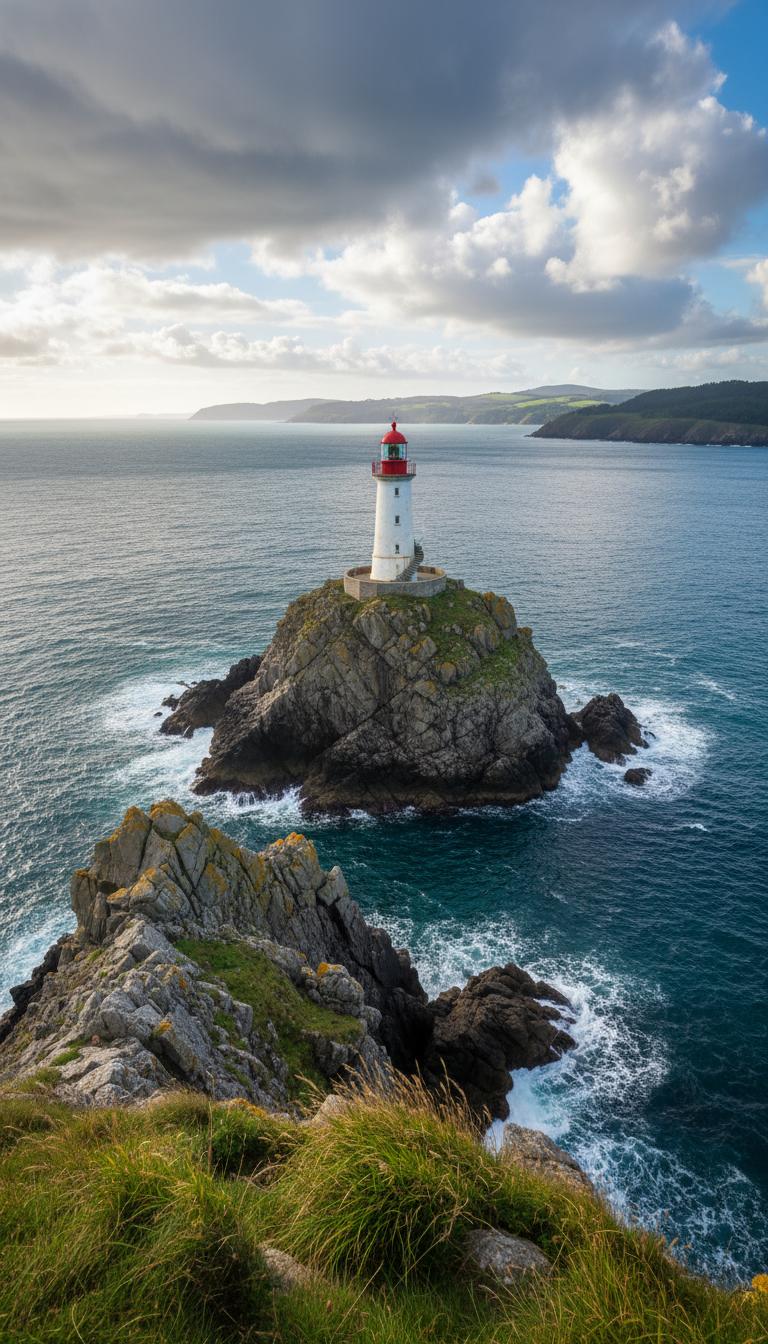
There is a peculiar magic in spotting a lighthouse from a rocky summer shoreline. Standing tall against the salt spray and endless blue, it feels less like a structure and more like a promise—someone, somewhere, is watching over the chaos of the sea. Yet these iconic towers carry a history far deeper than their postcard appeal suggests, and their journey from ancient necessity to modern vacation fantasy is one of humanity’s most illuminating architectural tales.
The story begins not with stone, but with fire. Long before architects drafted blueprints, ancient civilizations lit simple beacon fires on hilltops to guide vessels home. The Egyptians, however, elevated the concept into legend. Around 280 BC, Ptolemy II commissioned the Pharos of Alexandria on the island of Pharos, designed by the architect Sostratus of Cnidus. Soaring approximately 100 meters high, it was one of the Seven Wonders of the Ancient World and arguably the first true lighthouse. Its polished bronze mirror reflected sunlight by day and fire by night, visible for dozens of kilometers across the Mediterranean. Though earthquakes eventually claimed it in the 14th century, the Pharos set the standard for every tower that followed, and the very word “pharos” became synonymous with lighthouse across Romance languages.
Romans, never ones to ignore practical infrastructure, spread lighthouses across their empire with bureaucratic efficiency. From Dover to Libya, these towers marked the edges of the known world. Their purpose was brutally pragmatic: prevent shipwrecks, protect trade routes, assert territorial control, and collect tariffs. Yet for the sailors who spotted them after weeks of uncertain navigation, they symbolized something almost spiritual—salvation, home, and the end of isolation. In medieval Europe, lighthouses were often operated by monastic orders, who viewed the keeping of the light as a sacred duty, a literal act of guiding the lost toward safe harbor.
Today, the United States claims the largest collection of lighthouses of any nation, with Michigan alone housing more than any other American state thanks to its vast Great Lakes coastline. Norway and Japan also boast dense networks of coastal towers, each engineered to withstand uniquely brutal local conditions. Conversely, landlocked nations like Switzerland, Austria, or Mongolia possess no true maritime lighthouses at all, though a handful maintain modest beacon lights on major lakes. There is something quietly poetic about that geographic divide: you only build lighthouses where the water poses a threat, which means their very existence is a confession of danger.
For centuries, these structures were built from whatever the local landscape offered—granite in New England, cast iron in the American South, timber in Scandinavia, and coral stone in the Caribbean. The real revolution arrived in 1822 when French physicist Augustin-Jean Fresnel unveiled his revolutionary lens. By bending light into a powerful, concentrated beam using a series of prisms, the Fresnel lens transformed lighthouses from dim flickers into precision instruments capable of cutting through the thickest fog. Some of these glass masterpieces, standing three meters tall and composed of hundreds of hand-polished prisms, remain in operation today, though modern LEDs have largely replaced their sweeping beams.
Symbolically, lighthouses have always occupied fertile ground in the human imagination. They represent steadfastness in chaos, guidance without possession, and solitude with purpose. Writers and filmmakers have long exploited this imagery, turning keepers into romantic figures battling both storms and inner demons. In reality, the job was grueling—monotonous, isolated, and physically demanding. Keepers trimmed wicks, polished lenses, recorded weather data, and maintained fog signals in conditions that would send most people running inland. Families lived in cramped towers for months, and the psychological toll of such isolation was immense.
What has changed most dramatically is the keeper himself. Automation, GPS navigation, and solar-powered LED systems have rendered the traditional lighthouse keeper obsolete by the early 21st century. Many towers now stand empty, their lights programmed remotely by maritime authorities. Yet paradoxically, this decline has fueled a new popularity. Decommissioned lighthouses have been reborn as boutique hotels, museums, and exclusive summer vacation rentals. Social media has turned them into pilgrimage sites for photographers chasing golden-hour symmetry and for travelers seeking an “unplugged” escape.
The modern lighthouse no longer saves lives every single night, but it serves another purpose: it anchors us to a slower, more tactile past. In an era of invisible satellites and digital maps, there is profound comfort in a technology you can touch, climb, and photograph. That is why, every summer, millions still seek them out—not because they need saving, but because they want to believe that something solid still stands against the tide.