
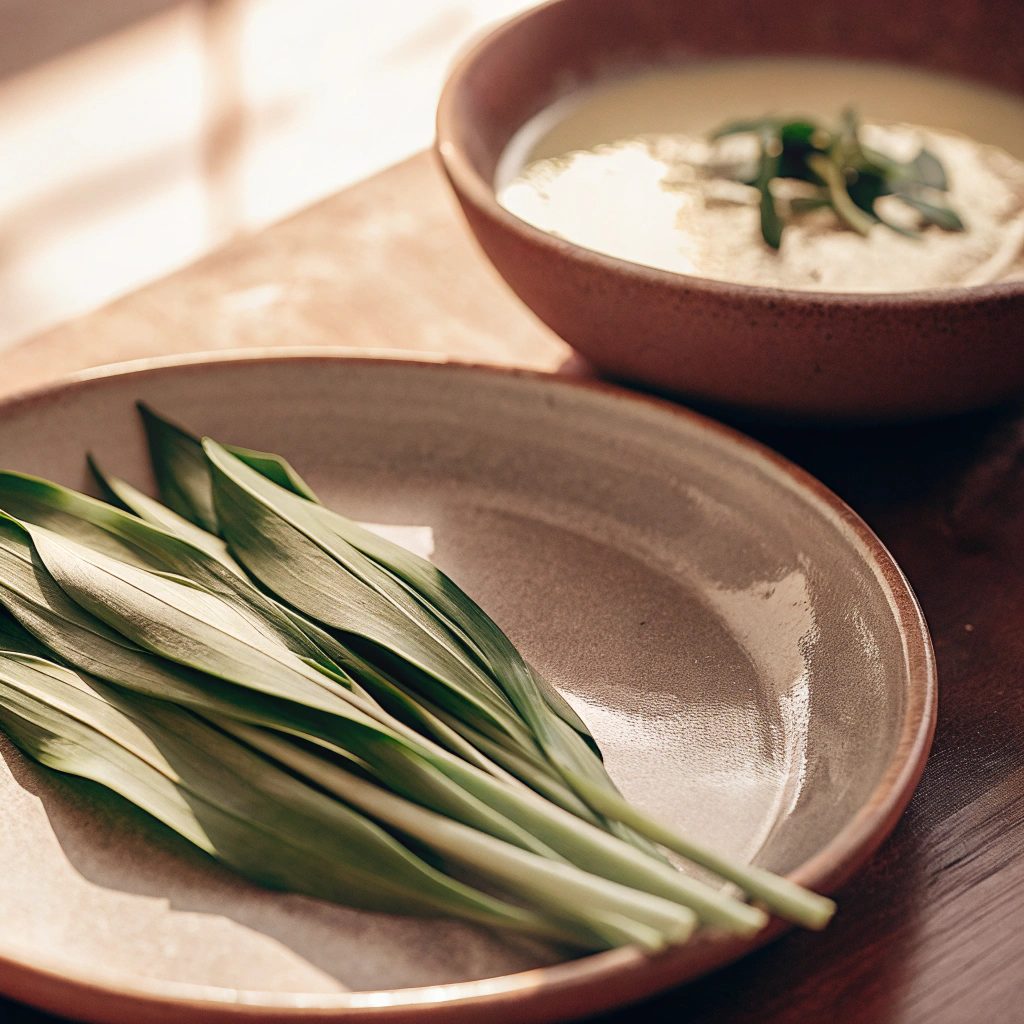
When early spring arrives, forests and shaded meadows begin to fill with the bright green leaves of wild garlic. This seasonal herb, known scientifically as Allium ursinum, has been appreciated for generations because of its pleasant aroma, culinary value, and traditional use in natural wellness.
Wild garlic belongs to the same plant family as common garlic and onions, but its taste is much softer and fresher. The leaves have a gentle garlic fragrance that becomes noticeable when they are crushed between the fingers. Because it grows naturally in woodland areas and appears only for a short period each year, it is considered a special ingredient of the spring season.
In many traditional kitchens across Europe, wild garlic is used in soups, spreads, salads, and sauces. Its vibrant green color and mild flavor make it a wonderful ingredient for simple homemade dishes that celebrate fresh seasonal foods.
What Is Wild Garlic?
Wild garlic is a perennial plant that grows naturally in moist forests and shaded landscapes. It usually appears in early spring before the trees develop dense foliage, allowing the plant to receive enough sunlight during its short growing season.
The plant can be recognized by:
- Long, smooth green leaves
- A mild garlic aroma
- Small white star-shaped flowers that appear later in spring
Because the plant grows in clusters and spreads easily, it often forms beautiful green carpets across forest floors during the spring months.
Nutritional Value
Wild garlic leaves contain a number of beneficial nutrients that make them both flavorful and nutritious. These include:
- Vitamin C
- Natural antioxidants
- Carotene
- Essential minerals
- Sulfur compounds similar to those found in garlic
These natural components contribute to the plant’s long-standing reputation as a helpful addition to a balanced diet.
Traditional Health Benefits
Wild garlic has been valued in traditional cooking and herbal practices for many years. While it is primarily enjoyed as a food ingredient, it has also been associated with several supportive health properties.
Circulation support
Compounds naturally present in wild garlic may help support healthy circulation and balanced cholesterol levels.
Digestive comfort
The plant has traditionally been used to stimulate appetite and help the digestive system function smoothly.
Seasonal cleansing
Spring herbs like wild garlic were often included in meals after winter as a refreshing addition to the diet.
Respiratory support
In traditional herbal preparations, wild garlic has sometimes been used to support respiratory comfort.
Natural antibacterial properties
Like other members of the garlic family, wild garlic contains compounds known for their natural antimicrobial activity.
Harvest Season
Wild garlic appears very early in the year and is usually harvested during spring.
The most commonly used parts are:
- Fresh leaves
- Young flower buds
- Occasionally the bulbs
Leaves are typically collected between March and May, when they are still tender and aromatic. Because drying reduces its fragrance and flavor, wild garlic is best used fresh.
Using Wild Garlic in the Kitchen
Wild garlic has become increasingly popular in modern cooking thanks to its mild flavor and vibrant color. It can be used in many simple recipes and adds freshness to everyday meals.
Popular ways to use wild garlic include:
- Fresh green salads
- Homemade pesto
- Creamy soups
- Egg dishes and omelets
- Herb butter spreads
- Pasta sauces
- Vegetable dishes
Because its taste is lighter than traditional garlic, it blends easily with other ingredients without overpowering them.
Simple Wild Garlic Soup
Ingredients
- 2–3 cups fresh wild garlic leaves, chopped
- 2 tablespoons butter
- 2 medium onions, finely chopped
- 3 medium potatoes, diced
- 4 cups vegetable broth or water
- Salt and black pepper to taste
- Optional: sour cream for serving
Instructions
- Melt the butter in a medium pot over moderate heat.
- Add the chopped onions and cook until they become soft and slightly translucent.
- Stir in the diced potatoes and pour in the broth or water.
- Let the mixture simmer for about 15 minutes, or until the potatoes are tender.
- Add the chopped wild garlic leaves and cook for another 1–2 minutes.
- Blend the soup until smooth using an immersion blender or standard blender.
- Season with salt and pepper according to taste.
- Serve warm, optionally topped with a spoonful of sour cream.
Why This Spring Herb Is Special
Wild garlic is one of those ingredients that perfectly captures the spirit of seasonal cooking. Its fresh aroma, vibrant green color, and gentle garlic flavor make it ideal for light spring dishes. Whether used in soups, sauces, or salads, it adds a unique touch to simple homemade meals.
Because the plant grows only for a short time each year, enjoying it fresh during the spring months makes the experience even more special.