
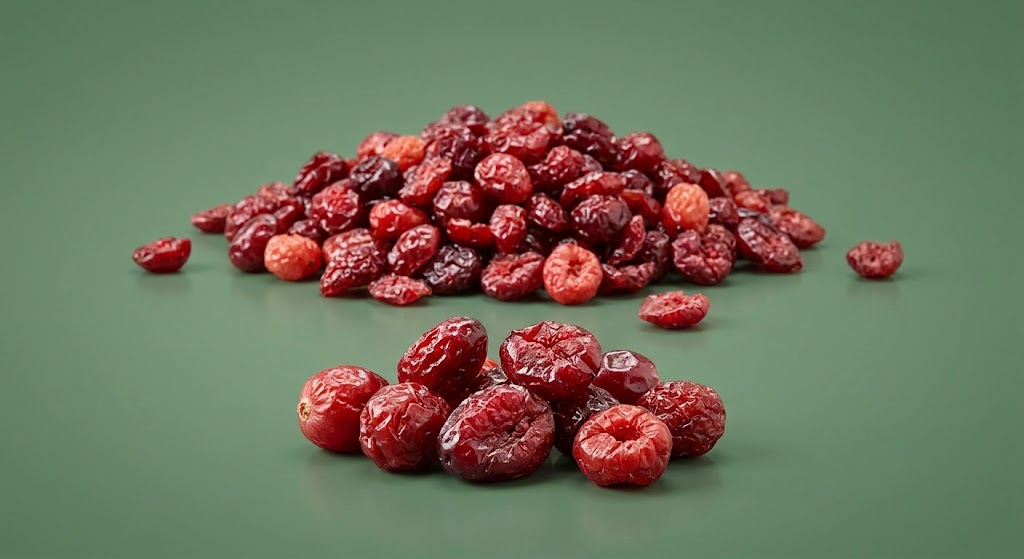
Few fruits carry as much history, symbolism, and quiet cultural weight as the cranberry. This small, ruby-red berry, with its sharp, tangy flavor, has traveled a remarkable path — from wild wetland harvesting to modern kitchen tables around the world.
Ancient Origins
The cranberry is one of the few fruits that are truly native to North America. It grew wild in bogs and marshes long before European settlers arrived, thriving in the acidic, sandy soils of the northeastern regions of the continent. Indigenous peoples were the first to recognize its value. They harvested wild cranberries for centuries, using them as food, as natural medicine, and even as a dye for fabrics. One fascinating detail from this early era: crushed cranberries were mixed with dried meat and fat to create a long-lasting food called “pemmican” — an ancient recipe for energy and preservation that traveled remarkably well.
In the Bible and Symbolism
While the cranberry itself does not appear in the Bible, the plant belongs to the genus Vaccinium, and many scholars believe that when biblical texts mention “berries of the bush,” they may well refer to relatives of this very family. Its deep red color has long made it a symbol of the earth’s abundance, gratitude, and harvest. In later centuries, its vivid hue became associated with warmth, home, and the idea of a table filled with plenty. Few fruits are as deeply tied to the symbolism of gathering and sharing.
Becoming a Modern Favorite
Cultivation of the cranberry began in the early 19th century, and growers quickly discovered something remarkable about it: the berry floats. Instead of picking each fruit by hand, farmers flood the fields, and the berries rise to the surface for easy, efficient collection. This unique harvesting method turned what was once a rare wild delicacy into one of the world’s most recognizable fruits.
Today, the best-known varieties include the American Cranberry (Vaccinium macrocarpon), the most widely grown, the smaller European Cranberry (Vaccinium oxycoccos), found in colder northern climates, and the Mountain Cranberry, prized for its intense flavor. Some wild varieties have largely disappeared from use because they are too small, too sour, or simply impractical to cultivate — a quiet reminder that not every natural treasure survives the age of agriculture.
The Cranberry Today
The cranberry’s influence is surprisingly vast. It is celebrated not only in cooking but in literature, folklore, and seasonal traditions. Its journey from wild bogs to global popularity reflects a larger story: nature’s simplest gifts often become culture’s most enduring symbols.