Walk into a professional kitchen and you may hear words that sound almost like another language. A chef might ask you to toast the sesame, flambé the sauce, deglaze the pan, or reduce the stock. None of these instructions is complicated once you understand what the words actually mean.
Culinary terminology is more than kitchen vocabulary. These expressions describe techniques that can change the flavor, texture, aroma, and appearance of food. Learning them is like learning the grammar of cooking.
Toast
To toast an ingredient means to heat it until its natural flavor and aroma become more pronounced.
For example, when a recipe says to toast sesame seeds, place them in a dry skillet over medium heat and stir frequently. The tiny seeds gradually turn golden and release a warm, nutty aroma. No oil is necessary. The important thing is to watch them carefully because sesame can go from beautifully toasted to bitter in a surprisingly short time.
The same technique can be used with nuts, spices, breadcrumbs, and grains.
Flambé
Flambé comes from the French word meaning “flamed.” It is a technique in which alcohol is added to a hot pan and briefly ignited.
The flame burns off much of the alcohol while leaving behind the concentrated flavors of the spirit and the ingredients in the pan. Bananas, cherries, steaks, and certain sauces are classic examples.
Flambéing is dramatic, but it is not simply a restaurant trick. It is a controlled cooking technique that requires care: alcohol should never be poured directly from the bottle into a hot pan, and proper kitchen safety is essential.
Deglaze
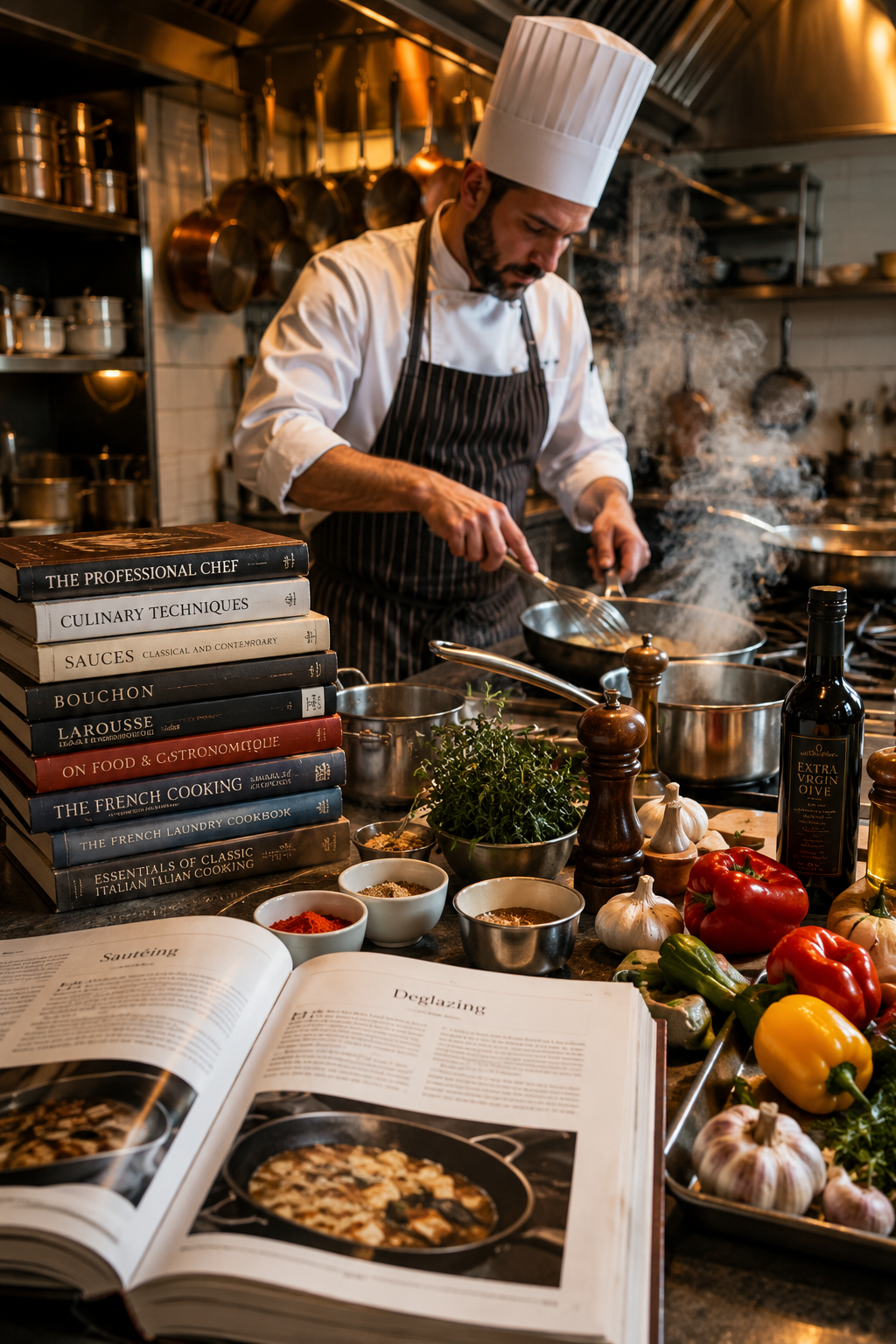
To deglaze a pan means to add liquid to a pan after cooking meat, vegetables, or other ingredients.
Those browned bits stuck to the bottom of the pan are called fond, and they contain an enormous amount of flavor. Adding wine, stock, vinegar, or another suitable liquid loosens these caramelized pieces so they can become part of a sauce.
In other words, deglazing turns what looks like residue into the beginning of something delicious.
Reduce
When a chef tells you to reduce a sauce, stock, wine, or other liquid, the instruction is simple: simmer it so some of the water evaporates.
As the liquid decreases in volume, its flavor becomes more concentrated and its consistency thicker. A good reduction can turn a thin cooking liquid into a glossy sauce with remarkable depth.
Sauté
To sauté means to cook food relatively quickly in a small amount of fat over moderate to moderately high heat.
The word comes from the French sauter, meaning “to jump,” referring to the way food can move or “jump” in the pan as it cooks. Sautéing is ideal for vegetables, mushrooms, onions, seafood, and small pieces of meat.
Blanch
Blanching means briefly cooking food—usually in boiling water—and then cooling it rapidly, often in ice water.
This technique can preserve a vegetable’s bright color and crisp texture. It is also useful for loosening the skins of tomatoes, peaches, and other produce.
Mise en Place
Perhaps the most important expression in a professional kitchen is mise en place, a French phrase meaning “everything in its place.”
It refers to preparing and organizing ingredients, equipment, and utensils before cooking begins. Chopped onions are ready, spices are measured, vegetables are prepared, and the necessary pans are within reach.
Good mise en place does not merely make cooking faster. It makes cooking calmer, more precise, and far less chaotic.
Once these words become familiar, recipes begin to read differently. Instead of mysterious instructions, they become a series of precise actions—and that is where cooking starts to feel less like guesswork and more like a craft.