Long before it carried an emperor’s name, the month we now call August answered to Sextilis — the sixth month in a ten-month Roman calendar that simply ignored winter because nothing grew and no one fought. It was a practical slot for drying grain and preparing soldiers, with thirty days and no glory.
Everything changed in 45 BCE when Julius Caesar reformed the calendar, adding January and February and pushing every other month back by two positions. Sextilis landed in eighth place, stripped of its numerical name but still holding thirty days. It would take another half-century before a man decided that being eighth was not enough — it needed to be immortal.
That man was Augustus Caesar. After his death in 14 CE, the Roman Senate renamed Sextilis in his honor, claiming he had entered Alexandria during this month and ended the republic’s civil wars. The quieter truth was simpler: Julius had a month, so Augustus wanted one too. In 8 BCE, the Senate made it official and stole a day from February to give August thirty-one days. That extra day exists not because of astronomy, but because of ego.
The month of August never appears in the Bible by its Roman name, but its seasonal footprint overlaps with the Hebrew month of Av, a period of mourning. Tisha B’Av commemorates the destruction of both Temples in Jerusalem. In Christian tradition, August 15 marks the Feast of the Assumption of Mary. In medieval Europe, August 1 was Lammas — Loaf Mass — when the first wheat harvest was baked into bread and brought to church for blessing.
Symbolically, August sits at the hinge of the year. The zodiac hands the torch from Leo to Virgo, fire softening into earth. Its birthstone is the peridot, formed in volcanic heat, and its flowers are the gladiolus and the poppy — one standing sword-straight, the other drooping with sleepy seeds. Nature seems to understand that August is contradiction: the peak of abundance and the beginning of decline.
No month produces more extreme records. August holds some of the highest temperatures ever reliably recorded on Earth, including the infamous 134°F in Death Valley in 1913. Yet in the Southern Hemisphere, August is the dead of winter, the darkest and coldest point of the year for half the planet. The biggest meteor shower visible to the naked eye, the Perseids, peaks every August, raining up to a hundred shooting stars per hour — a celestial harvest ancient cultures watched with the same urgency they watched their fields.
Today, the month of August means something very different than it did for the Romans. For most of the modern world, it is the last gasp of summer vacation, the season of state fairs and overripe tomatoes. In Italy, Ferragosto on August 15 still empties cities as families flee to the coast. In Scandinavia, crayfish season begins with paper lanterns and aquavit. In Japan, Obon festivals welcome ancestral spirits home.
The most profound shift happened quietly in the twentieth century, when air conditioning and standardized school calendars turned August from agricultural labor into leisure. Before the 1960s, American schools opened in late August because children were needed in the fields. Now it is the month of panic-buying notebooks and back-to-school sales before a single leaf falls.
What has not changed is August’s essential character: too much heat, too much daylight, too much produce — and never enough time before autumn. The Romans gave it an emperor’s name to make it unforgettable. Two thousand years later, we remember not because of the Senate’s decree, but because August still feels like the ceiling of the year, the highest, hottest, fullest point before the long slide into fall.
There is a reason August feels different from every other month. It is not just the heat, or the long shadows, or the way the evenings suddenly smell like dry grass and distant rain. August is the month when the earth finally stops growing and starts giving. After months of patience, the garden explodes into color, the farmers’ markets overflow, and every meal suddenly tastes like it was kissed by the sun.
If July is the promise, August is the payoff.
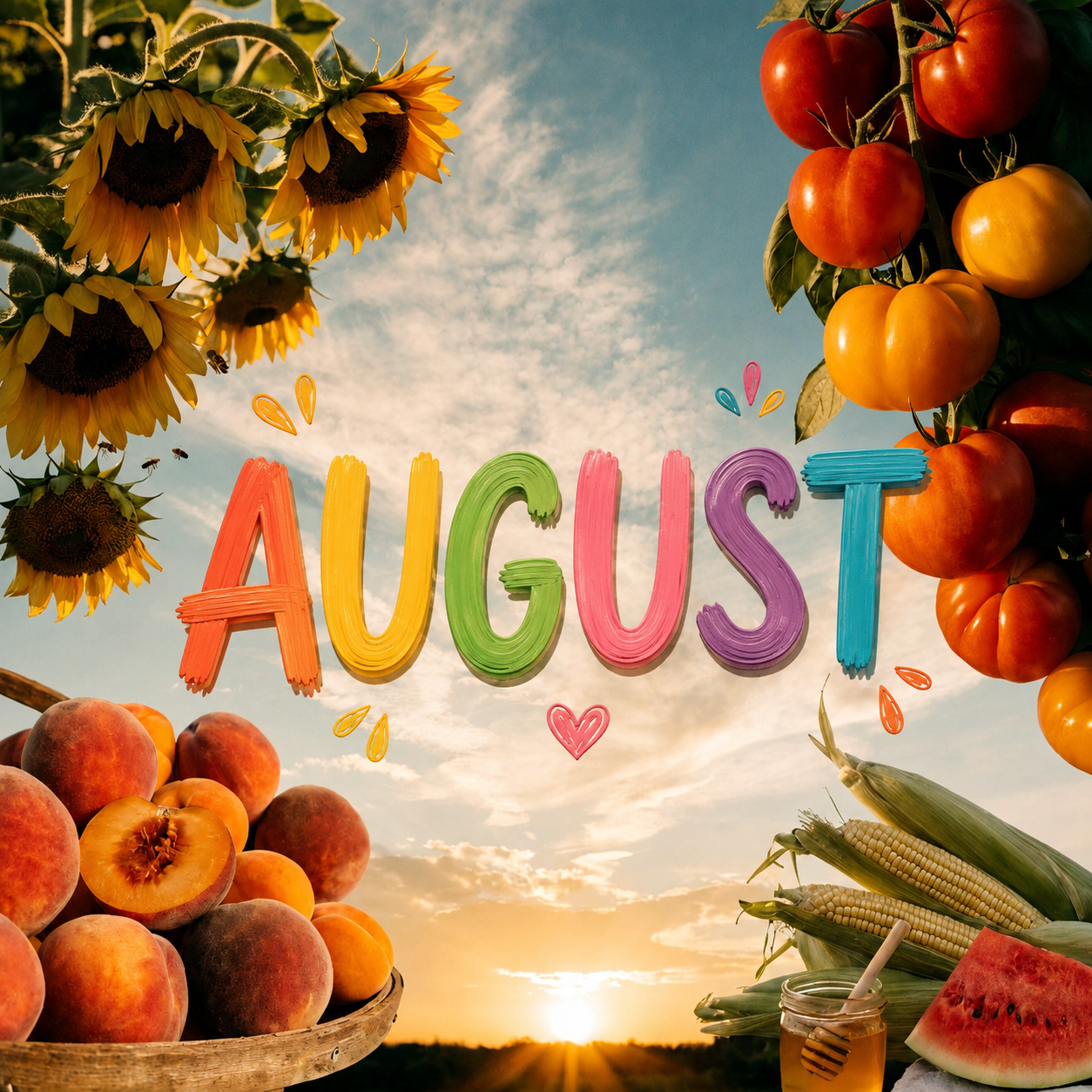
Walk through any farmers’ market in August and you will understand. The tomatoes are no longer pale and firm — they are heavy, almost bruised with sweetness, their skins splitting from the juice inside. The peaches give slightly when you touch them, and their smell is so strong you can find the best stall with your eyes closed. Watermelons sit in piles like green bowling balls, waiting for the thump that proves they are ready. Corn is piled high in rough green jackets, and the first apples — the early ones, the impatient ones — are already appearing beside late-summer berries that stain your fingers purple.
This is the month when cooking becomes almost embarrassingly easy. A tomato sliced thick, sprinkled with flaky salt, and drizzled with olive oil is not a side dish — it is a masterpiece. A peach sliced over Greek yogurt needs nothing else. Grilled corn with butter and chili powder requires zero technique and delivers maximum joy. August food does not need a chef. It needs someone humble enough to get out of the way.
But August is also the month of preservation, of urgency, of the quiet panic that comes with too much abundance. Because the tomatoes will not wait. The peaches will soften and mold. The basil will bolt and turn bitter. So August kitchens become factories of memory. Jars of tomato sauce line the counter. Peach jam bubbles on the stove. Basil is blanched, shocked, and frozen into bright green ice cubes that will rescue a February soup. Pickles are made not because anyone needs another jar of pickles, but because the cucumbers keep coming and throwing them away feels like a sin.
For most of history, August was not a month of leisure — it was a month of labor. Harvest had to happen now, or hunger would happen later. Every culture has its August traditions. In Italy, families gather for the tomato passata ritual, turning crates of San Marzanos into sauce that will last the year. In the American South, grandmothers stand over pots of peach preserves while grandchildren steal slices from the cutting board. In Eastern Europe, August is when the last cucumbers become pickles, the last peppers become a traditional roasted pepper spread, and the last plums become fruit brandy.
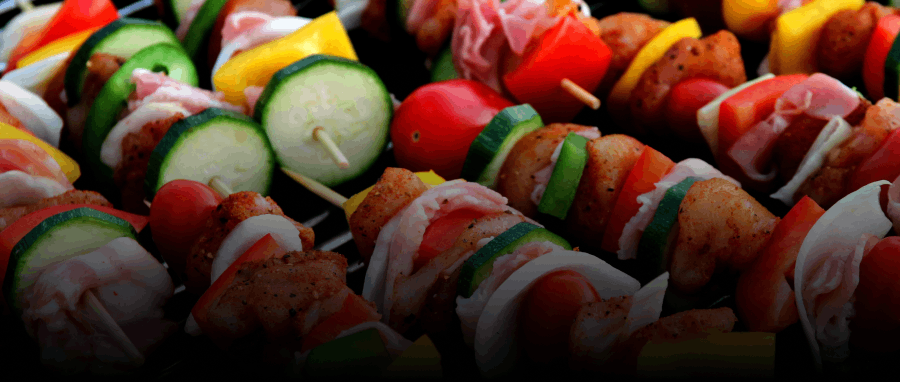
Even the way we eat in August is different. Dinner moves outside. The grill becomes the main kitchen. Meals are later, lazier, stretched across the evening like a yawn. We eat with our hands more. We drink more cold things. We let watermelon juice run down our chins without embarrassment, because in August, dignity is overrated and sweetness is everything.
And then, quietly, August begins to turn. The light shifts. The mornings are cooler. The first apple you bite into has a whisper of autumn in it. The tomatoes are still sweet, but you can feel them winding down. The garden looks tired, spent, generous to the point of exhaustion.
That is the beautiful sadness of August. It is the peak, the climax, the last glorious breath before the exhale. It is the month that reminds us that everything good is temporary — which is exactly why we should eat it while it is here.
So if you are reading this in August, stop. Go find a ripe peach. Eat it over the sink. Let the juice run. That is the whole point of this month.
So when you flip your calendar to August, you are holding a small piece of imperial propaganda, a stolen day from February, and a reminder that even time itself can be renamed by a man who wanted to be remembered.