
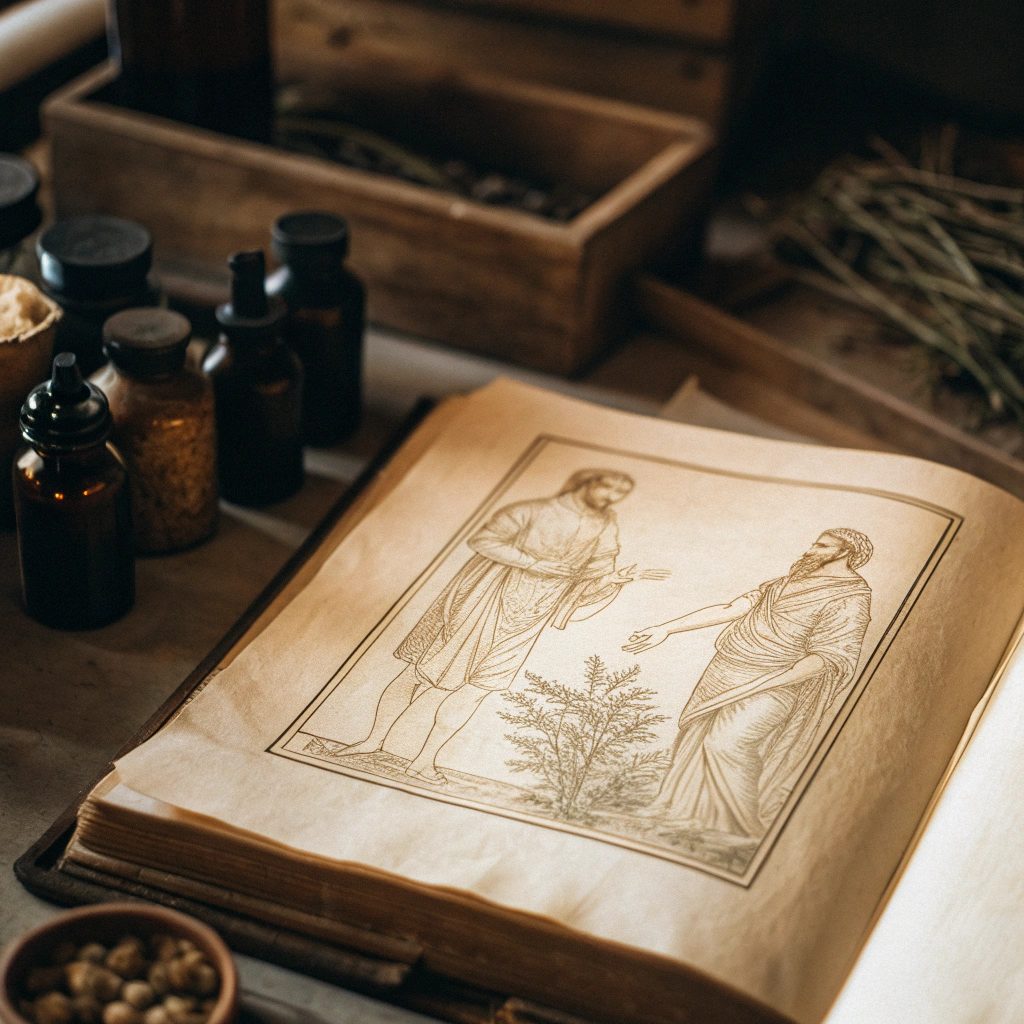
Herbal Medicine Through the Ages –
Herbal medicine has been a cornerstone of human health for thousands of years. Across civilizations, people have used plant, animal, and mineral materials for their medicinal properties, shaping the way societies healed and preserved well-being.
Ancient Egypt: Medicine of the Nile
Ancient Egyptians were pioneers in medicinal preparations, initially relying on local plants along the Nile. As their influence grew, trade brought exotic spices, fragrances, and rare ingredients from the East.
Some of the herbs and substances they used around 1500 BCE included: henbane, sea onion (used for seasickness), sage, marjoram, mint, castor oil, olive oil, juniper berries, saffron, wormwood, lily, St. John’s wort, thyme, cinnamon, and fragrant Indian spices.
The Ebers Papyrus (c. 1550 BCE) documents the use of medicinal plants, embalming techniques, and distilled fragrant waters. Ancient tombs reveal the Egyptians’ deep knowledge of herbal remedies, crucial for supporting large-scale projects like the pyramids, where disease control was essential.
Priests played a vital role in healing, blending prayer, fasting, and rituals with medicinal treatments. Wine, oil, and even human and animal urine were sometimes used therapeutically.
Phoenicians: Spreading Knowledge Through Trade
The Phoenicians, renowned for their maritime trade, helped transmit medicinal knowledge from Asia to Europe. They valued wine as a healing agent, though its cost limited accessibility.
Greece and Rome: From Ritual to Science
Early Greek medicine was heavily intertwined with religion and magic, with priests, magicians, and soothsayers practicing healing rituals. Over time, Greek and Roman herbalists moved toward scientific observation and experimentation.
Medicinal herbs were administered in various forms: macerations, infusions, decoctions, oils, wines, liniments, and ointments. Herbalists operated shops selling gathered herbs, and classical writers documented medicinal uses extensively.
- Hippocrates (459–370 BCE): Known as the father of medicine, he described around 300 medicinal plants, including wormwood and yarrow for fever, black onion for intestinal parasites, opium and henbane as narcotics, and castor, pumpkin, and colocynth for digestion. Oak bark and rue were used for blood clotting.
- Dioscorides (1st century CE, Asia Minor): His masterpiece De Materia Medica described over 500 plants and substances, their therapeutic uses, harvesting methods, storage, and preparation. His work influenced European and Arab medicine for over 15 centuries.
Even Homer’s Iliad mentions the use of herbal remedies, demonstrating the enduring influence of herbal knowledge in ancient culture.

Key Medicinal Ingredients
Medicinal plants contain water, organic compounds, and minerals. Organic components include alkaloids, glycosides, saponins, essential oils, starches, resins, proteins, sugars, tannins, and mucilage. Leaves typically contain the highest mineral content. While many medicinal compounds are known, much of the plant kingdom remains unexplored.
The Herbal Calendar: Harvesting for Maximum Benefit
Through centuries of observation, humans discovered that medicinal potency varies by plant stage and season.
- January: mistletoe
- February: mistletoe, spurge, birch fruits, pine buds
- March: nettle, buckthorn, oak bark, burdock root, dandelion, coltsfoot, poplar buds, willow buds
- April: peony, hawthorn, clover, buckthorn, rosemary, lily of the valley, oregano, coltsfoot, yarrow, chamomile
- May: sage, peony, birch, wild chestnut, strawberry, chamomile, nettle, linden, hawthorn, lemon balm, elder
- June: marshmallow, plantain, blueberry, birch, hawthorn, St. John’s wort, yarrow, nettle, rose, walnut, wormwood
- July & August: plantain, blueberry, birch, wild rose, St. John’s wort, chamomile, lavender, mint, walnut, elder
- September: wild rose, quince, oak bark, valerian, parsley, walnut
- October: angelica, pumpkin, burdock, dandelion, valerian
- November: hawthorn, burdock, dandelion, valerian
- December: mistletoe
This calendar guided herbalists to harvest plants at their peak potency, ensuring maximum therapeutic benefits.